

About 73% of companies now say design gives them a critical business advantage, and the worldwide UX industry is projected to reach $20 billion by 2028. Expectations have risen with the spending. UI/UX design is judged less on how a product looks and more on whether people can use it without help, whether it works for users with disabilities, and whether the experience is good enough to bring them back. Those qualities drive user engagement, loyalty, and real business outcomes.
That raises the stakes on choosing a design partner. The top UX design agencies combine detailed research, UX strategy, interaction design, and engineering, and they use all four to turn complex ideas into innovative digital products people find easy to use. They also differ more than their websites suggest. Some operate as a full service digital agency that bundles web design, digital marketing, and brand identity. Many specialize in enterprise software, SaaS platforms, and other B2B products, and a few concentrate on new interaction models such as AI. The best UX design agency for early stage startups building a first mobile app is rarely the right one for enterprise clients rebuilding complex web applications or a SaaS product used all day.
Before you compare UX design companies, read client reviews, ask each agency to walk you through its design process, and discuss budget and timeline expectations up front. Agree on communication channels, who joins which sessions, and how decisions get made. Strong collaboration and stakeholder alignment early on are good predictors of execution quality later. The partner you pick will shape how your product competes and how well it holds that position over time.
How to Choose
The Right UI/UX Design Agency
Choosing the right UI/UX design agency isn’t about finding someone who can simply make things pretty. It’s about finding a partner who understands human behavior, translates insights into innovative solutions, and delivers experiences that users love while achieving your business goals.
1. Proven UI/UX Design Portfolio & Results
Look beyond beautiful case studies. Seek agencies with a demonstrated track record of building successful products that users actually adopt and love. The best partners show measurable outcomes: increased conversion rates, improved engagement metrics, reduced support costs, and enhanced customer satisfaction scores.
2. Human-Centered Research Practice
Strong agencies ground their work in deep user understanding. They invest in ethnographic research, usability testing, behavioral analysis, and continuous validation. This human-first approach ensures designs solve real problems rather than creating digital experiences based on assumptions or trends.
3. Strategic Product Thinking
UI/UX excellence goes beyond pixels and prototypes. Leading agencies think holistically about product strategy, business models, user journeys, and ecosystem design. They help you define what to build and why, not just how it should look.
4. Technical Craft & Implementation Excellence
The best agencies understand the technical constraints and possibilities of modern platforms. They design within the realities of iOS, Android, web technologies, and emerging platforms while pushing creative boundaries. Their teams bridge design and engineering seamlessly.
5. Cross-Disciplinary Collaboration
Look for agencies that bring together diverse expertise: interaction designers, visual designers, researchers, strategists, content designers, and prototypers. This multidisciplinary approach yields richer, more comprehensive solutions.
6. Innovation & Design Vision
The strongest partners don’t just follow best practices—they define them. They stay ahead of evolving user expectations, emerging interaction patterns, and new design paradigms while maintaining focus on timeless usability principles.
Top UI/UX Design Agencies
Based on these criteria, we’ve curated a list of the top 10 UI/UX Design Agencies for 2025. These firms have proven track records of delivering exceptional user experiences that transform businesses and delight millions of users worldwide.
1. Punchcut
Future-Focused Experience Innovation
Image: Punchcut
Punchcut is an independent UX agency and innovation firm that has designed interfaces for emerging technology since 2002, working from San Francisco, a global hub for AI product development. It partners with enterprise clients and growth stage companies on AI, intelligent systems, automotive, mobile, and multi-device experiences that span web and mobile apps, usually where the interaction model does not exist yet. Engagements cover user research, opportunity definition, product strategy, user flows, interactive prototyping, usability testing, UI design, and design systems.
Why they lead: Punchcut has spent more than two decades designing at the front of platform shifts, from mobile and wearables to automotive, voice, and now AI. That history carries over to AI products, which produce variable outputs, act across multiple steps, and hand control back and forth between the system and the person using it. Punchcut designs for that behavior directly and tests its work against live models instead of static mockups. Through its experience design agency work, senior UX designers from its in-house design team join client teams and take an ambiguous product opportunity to a tested experience direction, often within six to twelve weeks. That collaborative approach keeps the service focus on product experience and interaction design.
What sets them apart:
- AI-native design systems. Component libraries, patterns, and governance rules built for model-generated content instead of static screens. They specify how variable outputs, confidence states, loading behavior, and errors should look and behave in the user interface.
- Agentic workflows. Design for systems that act on the user’s behalf across several steps. That means mapping user intent, tool boundaries, approval points, and failure states into a workflow a person can follow and override.
- Autonomy. Defined levels of autonomy, plus the interface cues that make a shift in control clear to the user instead of alarming.
- Research. Generative research to find the right problem and evaluative research to test the proposed experience. Its human-centered AI consulting practice includes an original study of more than 1,000 technology consumers on what they expect from AI.
- AI design engineering. Prototypes built against live models and working pipelines, so design decisions are tested against how the model actually behaves.
- AI-native processes. AI used inside Punchcut’s own workflow to speed up research synthesis, design variants, and pattern exploration, which leaves more of the budget for judgment calls AI can’t make. The same thinking applies to generative UI, where a model assembles the interface in real time.
Notable clients: Google, Amazon, Ford, Fitbit, Samsung, LG, Disney, Salesforce, Johnson & Johnson, Nissan, Medtronic. Fortune 500 technology leaders, global automotive brands, consumer electronics manufacturers, telecommunications providers, and innovative startups across AI, autonomous systems, and connected devices.
Best for: Companies seeking innovation specialists to design breakthrough UI/UX experiences across emerging technologies and multimodal platforms.
2. IDEO
Design Thinking Pioneer
Image: IDEO
IDEO is arguably the most iconic name in design, credited with popularizing design thinking as a discipline and creating some of the most influential products of the past three decades. Their human-centered approach has transformed industries from healthcare to education, finance to retail. IDEO brings a unique combination of design, business strategy, and organizational change expertise to help companies reimagine entire experiences and services.
What sets them apart:
- Legendary reputation and influence in design thinking methodology
- Multidisciplinary teams combining design, business, and behavioral expertise
- Global reach with studios across continents and diverse industry impact
- Holistic approach addressing systems, services, and organizational transformation
- Track record working with Fortune 500 companies and ambitious startups alike
Notable clients: Apple, Sephora, Ford, PepsiCo, National Science Foundation, Umpqua Bank, and leading organizations across healthcare, education, technology, and public services.
Best for: Organizations seeking transformative innovation strategies and holistic experience design across complex systems and services.
3. Frog Design
Creative Innovation
Image: Frog Design
Frog Design has been shaping the future of design since 1969, with a legacy that includes defining the visual language for Apple, Sony, and Microsoft. Today, Frog continues to lead with creative excellence, strategic foresight, and deep technical expertise. Their capabilities span product design, service design, brand experience, and business innovation, making them a comprehensive partner for organizations seeking to differentiate through design.
What sets them apart:
- 50+ years of design legacy and iconic brand partnerships
- Global creative studios with diverse cultural perspectives and expertise
- Strong focus on design strategy and business transformation
- Excellence across physical product, digital experience, and brand design
- Proven ability to balance creativity with business pragmatism
Notable clients: Apple, Microsoft, Sony, Disney, General Electric, Intel, Nike, Visa, Lufthansa, and leading brands across technology, healthcare, telecommunications, and consumer goods.
Best for: Global brands seeking creative excellence and strategic design innovation across physical and digital touchpoints.
4. Blink UX
Research-Driven Experience Design
Image: Blink UX
Blink UX is a specialist UI/UX research and design firm known for their rigorous, evidence-based approach. They combine qualitative and quantitative research methods with expert design craft to create experiences grounded in deep user understanding. Blink’s methodical process ensures every design decision is validated and optimized for real-world performance.
What sets them apart:
- Deep expertise in UX research and human factors
- Data-driven design methodology with measurable outcomes
- Strong focus on usability testing and iterative validation
- Specialization in complex enterprise and consumer products
- Proven track record of improving conversion rates and user satisfaction
Notable clients: Amazon, Microsoft, NASA, Google, Meta, JPMorgan Chase, Boeing, Starbucks, YMCA, Bill & Melinda Gates Foundation, and innovative startups across technology sectors.
Best for: Companies seeking research-driven design expertise to optimize existing products or validate new concepts before launch.
5. Method
Digital Product Excellence
Image: Method
Method operates as a strategic design consultancy specializing in crafting intuitive digital experiences across web, mobile, and IoT ecosystems. Following its acquisition by GlobalLogic, now part of the Hitachi Group, Method delivers the precision and creativity of a boutique studio backed by global enterprise resources. Their strength lies in distilling intricate business challenges into seamless, accessible interfaces that work fluidly across all touchpoints.
What sets them apart:
- Strong digital product design capabilities across platforms
- Balance of creative excellence and technical implementation
- Enterprise backing with boutique design culture
- Cross-functional teams integrating design and development
- Track record with leading technology and consumer brands
Notable clients: Barclays, Google, Nordstrom, LG, MoMA, Steelcase, Microsoft, Boxee, TED, Stellar, The Economist, 23andMe, Gulfstream, and WWF.
Best for: Mid-to-large companies seeking polished digital product design with strong technical implementation.
6. Designit
Service Design & Digital Transformation
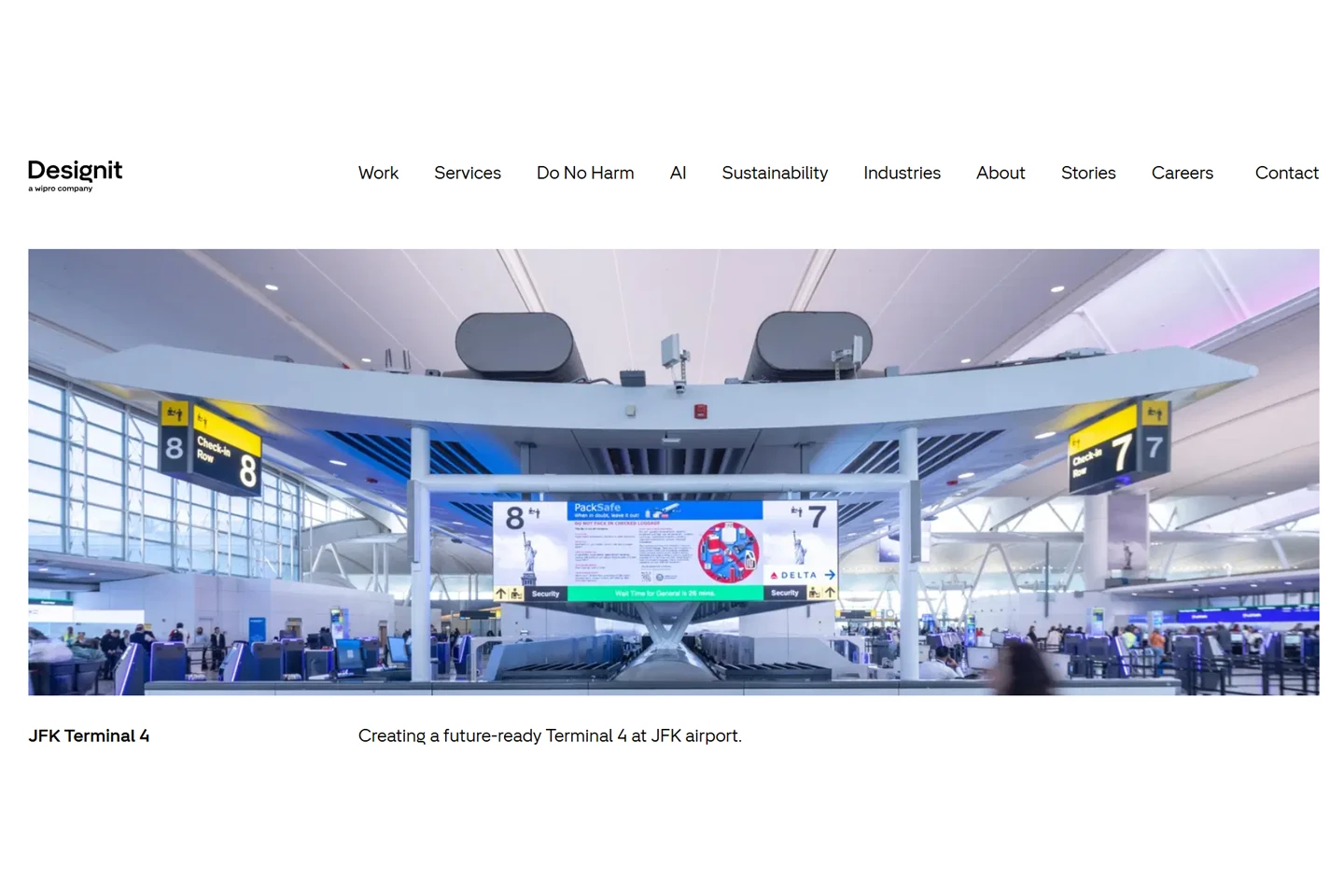
Image: Designit
Designit (part of Wipro) is a global strategic design firm specializing in service design, digital transformation, and experience innovation. With studios across Europe, Asia, and the Americas, Designit helps organizations reimagine customer journeys and business models through human-centered design. They excel at orchestrating complex, multi-touchpoint experiences.
What sets them apart:
- Strong service design and customer journey expertise
- Global scale with local cultural understanding
- Integration of design with digital transformation consulting
- Enterprise-level project capabilities and delivery
- Focus on sustainable and socially responsible design
Notable clients: Detroit automakers, pharmaceutical companies, JFK Terminal 4, infrastructure authorities in the Middle East, and Fortune 500 companies across healthcare, automotive, telecommunications, finance, and retail sectors globally.
Best for: Large enterprises pursuing digital transformation and complex service design initiatives across multiple markets.
7. Huge
Digital Experience & Brand Design
Image: Huge
Huge is a global digital agency that combines brand strategy, experience design, and technology to create unified digital ecosystems. Known for their work with major consumer brands, Huge excels at creating cohesive experiences across web, mobile, retail, and marketing channels. Their integrated approach ensures brand consistency while optimizing for each platform’s unique strengths.
What sets them apart:
- Brand-first approach to experience design
- Integrated digital ecosystem design and implementation
- Strong e-commerce and retail experience
- Enterprise-scale platform and system design
- Marketing and creative services alongside UX/UI
Notable clients: IKEA, JetBlue, CNN, Reuters, Four Seasons, Pepsi, Target, Google, and leading consumer brands across retail, media, travel, and technology sectors.
Best for: Consumer brands seeking integrated digital experiences across marketing, commerce, and product touchpoints.
8.Code and Theory
Product & Platform Design
Image: Code and Theory
Code and Theory is a digital-first creative agency that builds products, platforms, and campaigns for the world’s most ambitious brands. They bring together strategy, design, and engineering to create comprehensive digital solutions. Known for their work in media, entertainment, and technology sectors, they excel at creating engaging, high-performance digital experiences.
What sets them apart:
- Integrated creative and technical capabilities (50% engineers, 50% creatives)
- Strong media, entertainment, and content platform expertise
- End-to-end product development from strategy to launch
- Focus on performance and scalability alongside aesthetics
- Experience building consumer-facing digital platforms at scale
Notable clients: Amazon, JPMorgan Chase, Microsoft, MSNBC, NFL, Pfizer, Zappos, Adidas, The Ritz-Carlton, Polestar, USTA, and leading brands across sports, finance, hospitality, and media.
Best for: Media, entertainment, and technology companies building large-scale digital products and platforms.
9.ustwo
Digital Product Studio
Image: ustwo
ustwo is a digital product studio that creates experiences people love. Known for crafting Monument Valley and impactful digital products across industries, ustwo combines creativity, technology, and human values to deliver meaningful solutions. Their collaborative, people-first culture shapes everything they design, resulting in products that resonate emotionally while performing exceptionally.
What sets them apart:
- People-first design philosophy and studio culture
- Award-winning product design including consumer apps and games (Monument Valley)
- Strong mobile and app design expertise
- Collaborative partnership approach with embedded teams
- Focus on purposeful design that creates positive impact
Notable clients: Google, Ford, BMW, The Body Coach, Christie’s, Fresenius Medical Care, Adidas, Nissan, Three, Sony, and innovative startups across fintech, healthcare, and consumer sectors.
Best for: Organizations seeking a collaborative partner to design mobile-first digital products with emotional resonance and polish.
10.MetaLab
Interface Design Excellence
Image: MetaLab
MetaLab is a digital design studio renowned for their exceptional interface design and visual craft. With a portfolio including Slack, Coinbase, and Messenger, MetaLab has helped shape some of the most successful digital products of the past decade. They specialize in creating beautiful, intuitive interfaces that elevate brands and delight users.
What sets them apart:
- Exceptional visual design and interface craft
- Proven track record with high-growth tech companies
- Fast-moving, efficient project execution
- Strong brand and identity design capabilities
- Expertise in designing for modern web and mobile platforms
Notable clients: Slack, Coinbase, Facebook Messenger, Amazon, Google, Uber, Disney, Apple, TED, Walmart, TripAdvisor, Threads, YouTube, and innovative startups across fintech, social media, and technology sectors.
Best for: Tech startups and scale-ups seeking world-class interface design and brand elevation to compete with industry leaders.
The Bottom Line
Start with the problem you need solved, then look at agencies. Write down who your users are, what the product needs to do, the constraints you’re working within, the outcomes you expect, and how much support your internal team will need. Then decide what you’re buying: research and UX strategy, UI design with a strong visual identity, or design paired with software development. Many UI design companies hand off files, while others include web development, mobile app development, or custom software development in the same contract. If the goal is a sharper digital presence rather than a new product, a round of UX audits and a clear digital strategy may be enough.
If you’re building an AI product, add one more question: has the agency designed for a system that behaves unpredictably, and can it show you that work? Nearly every agency promises cutting-edge solutions and a seamless user experience, and plenty can produce user friendly designs and engaging digital experiences. Ask for case studies that connect the work to measured results. With those answers in hand, compare your shortlist of top UX agencies on relevant work, research depth, engagement model, and whether the senior team from the pitch is the team that will do the work. For teams working on intelligent, immersive, or complex digital products, Punchcut can help define the opportunity, test the experience, and get it ready for delivery.